Gift · Free formula
How to makecinematic AI images?Free formula
TL;DR
- Here’s the free 4-block formula we use for cinematic AI images: subject and action, shot and lens, motivated light, mood and film.
- The block that makes the difference is light: it needs a reason to be there, like a window or a lamp.
- You also get 3 full examples, free and ready to copy.
To make cinematic AI images, typing “cinematic” isn’t enough. You need to describe a director’s choices: who is there and what they do, how close the camera is and with which lens, where the light comes from, what the mood is. Below you’ll find the 4-block formula and 3 examples to use right away.
Why "cinematic" alone doesn't work
“Cinematic” is an adjective, but a film still is made of decisions. That’s why the word alone often gives you a generic image.
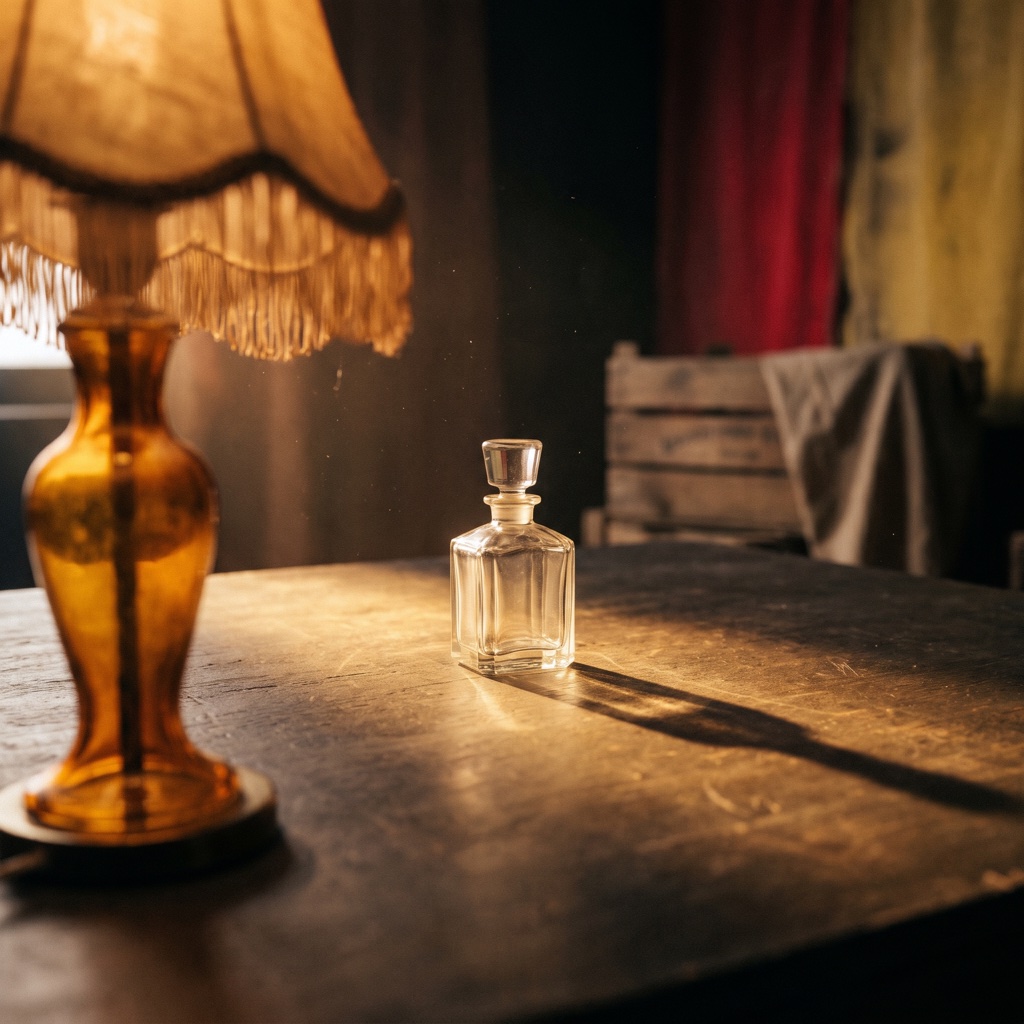
What your eye reads as cinema is almost always the light. In films, light has a reason: it comes through a window, falls from a lamp, bounces off a sign. Cinematographers call it motivated light. So the scene feels real, even when it’s built.
In the last two articles we talked about lenses and shot sizes. This formula puts them together and adds the missing piece.
The formula, block by block
You write it in one line, in this order:
- Subject + action. Who or what is there, and what they’re doing. A small action is enough: reading, waiting, reaching out.
- Shot + lens. How close the camera is (wide shot, medium shot, close-up) and which lens (35mm, 50mm, 85mm). This sets distance and perspective.
- Motivated light. Where the light comes from, what color it is, which side. For example: “warm light from a desk lamp out of frame, left”.
- Mood + film. The feeling of the scene (quiet night, grey morning) and the look: light grain, muted colors, a wide 21:9 frame.
Here are 3 full examples to copy and change.
Product still life
A glass perfume bottle with no label on a dark marble bar, a hand reaching for it. Medium close-up, 85mm lens, shallow depth of field. Warm light from a desk lamp out of frame, left. Quiet late night mood, soft haze, Kodak Vision3 500T film grain.Portrait
A young woman reading a letter by a kitchen window. Close-up, 50mm lens. Soft overcast daylight from the window on her right, deep shadow on the other side. Calm morning mood, light film grain, muted colors.Outdoor scene
A man in a long coat waiting at a bus stop in the rain. Wide shot, 35mm lens. Red and blue light from a neon sign behind him, reflections on wet asphalt. Lonely night mood, anamorphic look, 21:9 frame.One detail on the first example: Kodak Vision3 500T is a real motion picture film, balanced for tungsten lamp light. That’s why it pairs well with a warm lamp.
What you get, what to keep in mind
What you get
- a fixed order, instead of a pile of adjectives
- images where you can tell where the light comes from
- a base you can change one block at a time
Keep in mind
- one main light source: two shadows in different directions stand out right away
- skip stacks like “epic, stunning, 8k”, because they confuse more than they help
- go easy on grain, since too much makes the image look dirty
4 steps to use the formula
- Start from the light. Before writing, decide where it comes in. Everything else builds around it.
- Write the blocks in order. Subject, shot, light, mood: that way you don’t forget anything.
- Change one block at a time. If the image doesn’t convince you, touch only the light or only the lens. Then compare.
- Check before you post. Look at shadows, hands and edges with our checklist, then decide.
FAQ
How do you make a cinematic AI image?
Describe the scene like a director would: subject and action, shot and lens, motivated light, mood and film. The 4-block formula puts these choices in order, in one line.
What is motivated light?
It’s light that seems to come from a believable source in the scene, visible or out of frame: a window, a lamp, a sign. In film it makes the scene feel real, and in AI images it works the same way.
Does it work with every image generator?
The structure does, because it describes the scene rather than a trick for one tool. Still, each model reacts a bit differently. So test it, and change one block at a time.
Should I write it in English?
Usually yes, because many models understand technical terms like close-up or 85mm better in English. If English isn’t your first language, think the scene in yours and translate at the end.
In short
“Cinematic” alone isn’t enough: you need a director’s decisions. The free 4-block formula puts them in order, with light at the center.
Want a campaign with images that look like film stills?
At UAIT.AI we direct the light, framing and mood of every scene, from brief to final retouch.
Keep reading
Sources
- No Film School, Motivated lighting: used for the definition of motivated light
- Kodak, VISION3 500T 5219/7219: used for the film being balanced for tungsten light (3200K)
- Formula and 3 examples: written for this article from Ale’s Inbox note and the UAIT.AI studio method (original resource)
- Internal links: How to choose the lens for AI images · How to tell if an image is AI generated