AI UGC · Guide
How to makeAI UGCthat really sells?
TL;DR
- Making AI UGC is now within anyone’s reach: from one product photo you can get a short “creator style” video with a person who doesn’t exist.
- The hard part is making it believable. It works when it looks shot on a phone in a real home, not when it looks like a commercial.
- There’s a clear line: an invented person telling an invented experience is a fake review. Show the product, don’t invent the customer.
To make AI UGC that sells, start from the audience, pick a face and a style that fit their feed, build an everyday scene and keep the product identical in every shot. Then take some perfection out: flat light, phone framing, a few things out of place. And never have the generated person say things they haven’t lived, like “I’ve used it for a month”.
What AI UGC is and why everyone is trying it
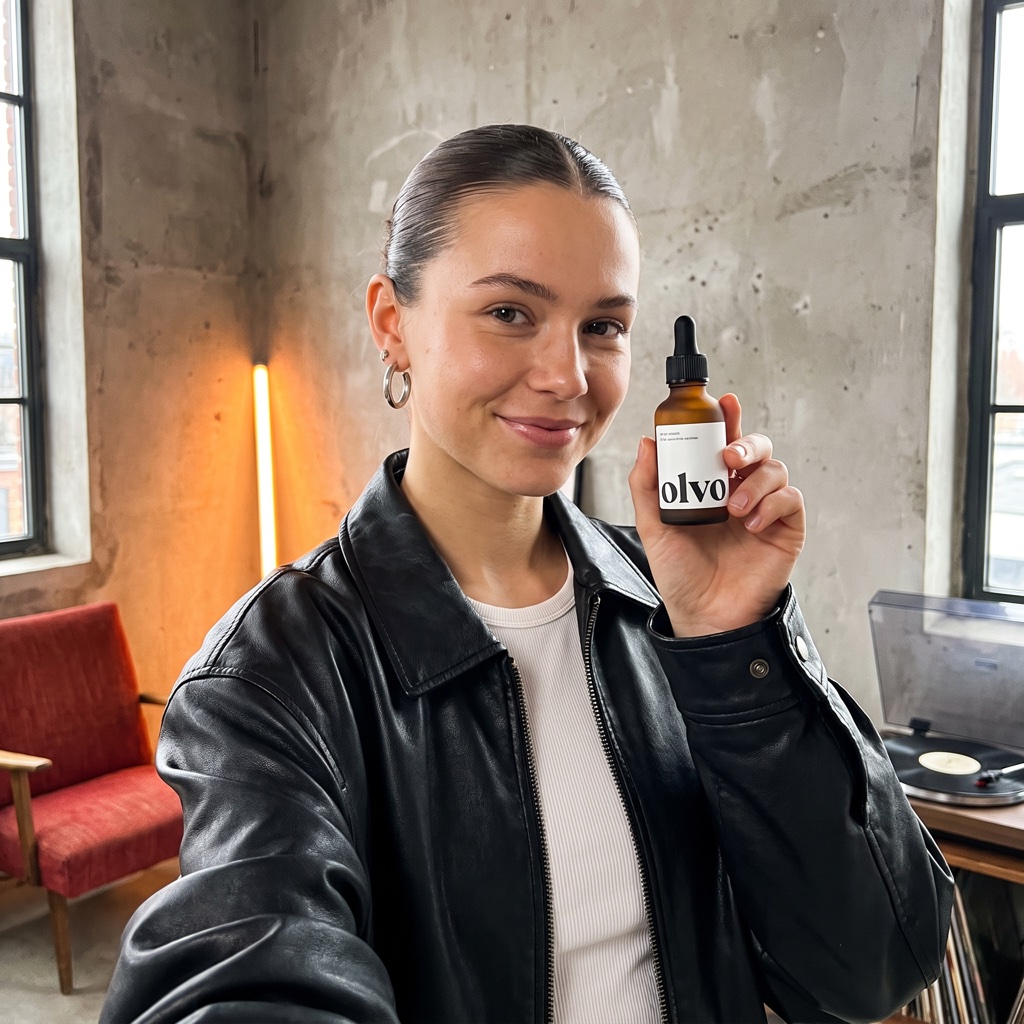
UGC means “user generated content”: videos and photos that look made by regular people, not by a brand. The classic bathroom video where someone tries a cream and says what they think. On social it works because it doesn’t look like advertising.
Until recently you needed creators to find, samples to ship and weeks of waiting. Today tools like Higgsfield’s Marketing Studio start from a product image and generate a short UGC-style video, with a talking person, a faceless one or a silent scene. There are open models for animating people and characters too, and the tool you pick matters less than what you ask of it.
The result isn’t automatic, though. Most AI UGC is easy to spot: too clean, too pretty, too similar. And once you spot it as fake, you stop watching.
How to do it, step by step
The process is the same one you’d use with a real creator. Only who produces the scene changes.
1. Audience. Before generating anything, write down who the content is for, what they care about and which problem the product solves. Tone, location and the first line all come from here.
2. Person. The person, the clothes and the setting have to look like the audience, not like a campaign. A girl in sweatpants in a small kitchen beats a model in a loft, if the viewer lives in a small kitchen.
3. Scene. This is the step where AI does the work. Bathroom, kitchen, gym, a street: places anyone recognizes as real. The product has to live inside the scene and be used, not just held up to the camera.
4. Product. Pack, shape, colors and details must stay identical in every image and every variant. If the label changes from one scene to the next, the illusion breaks and the brand loses credibility.
Add two habits to these four. Make several variants (different people, places, gestures) and compare them instead of falling for the first one. And work on the hook: the first seconds need a problem, a benefit or a curiosity strong enough to stop the scroll.
What you get, what we protect
Done well, AI UGC gives you plenty of variants to test without organizing a shoot, content ready before the product even reaches the warehouse, and the freedom to try different audiences with different people and places.
What you get: variants to test quickly · everyday scenes without a set · a product that’s always recognizable.
What we protect: no invented customers · no invented results · content labeled as AI where needed · no resemblance to real people.
The line isn’t just ethical. In the United States the FTC rule on fake reviews, in force since October 21, 2024, bans testimonials from people who don’t exist, including AI-generated ones. In the European Union, Article 50 of the AI Act, which applies from August 2, 2026, requires disclosing generated or manipulated content that could pass as authentic. And TikTok asks creators to label realistic AI-generated content. So a generated person can show how a product is used. They can’t tell an experience nobody had.
4 steps to your first AI UGC
- Write the brief in three lines: who’s watching, what bugs them, what the product does for them. If it doesn’t fit in three lines, the video will be confusing.
- Pick the place before the face. The location says “this is real” right away. A messy shelf is worth more than perfect light.
- Remove perfection on purpose. Slightly crooked framing, window light, a towel on the edge. If it looks like a commercial to you, it will to the people scrolling too.
- Read the script like a lawyer. Every line the generated person says must be true about the product (what’s in it, how to use it) and never an invented personal experience. Then add the AI label.
Frequently asked questions
Is AI UGC legal?
Showing a product with a generated person is possible. The problem starts when that person poses as a real customer and tells an experience: in the US the FTC treats that as a fake review. In Europe and on platforms like TikTok you also need to disclose that the content is made with AI.
Do I have to say it's made with AI?
Yes, when the content is realistic and could look real. That’s what the AI Act asks in Europe and what platform rules ask. A clear label doesn’t ruin the content. It only ruins the deception.
Does it replace real creators?
No. Where a community’s trust matters, a real creator who really uses the product can’t be replaced. AI UGC is for testing ideas, audiences and variants before you invest, or for scenes that would be hard to organize.
Why does my AI UGC look fake?
Almost always because it’s too polished: studio light, perfect skin, a clean set, the product held up like in a catalog. Bring the scene back to everyday life and have the product used, not just shown.
In short
AI UGC sells when it looks shot by a real person in their real life. Start from the audience, pick a face and a place that look like them, let AI work on the scene and keep the product identical everywhere. Then take some perfection out. And never have the generated person tell an experience they didn’t have.
Want to test AI UGC for your product?
At UAIT.AI we build social content and campaigns with AI, from direction to final format, with clear rules on what can be said.
Keep reading
- How does an ad campaign with a virtual model work?
- How to build an AI ad campaign from one product photo
- About
Sources
- Federal Register, Trade Regulation Rule on the Use of Consumer Reviews and Testimonials (August 22, 2024): used for the FTC rule, in force since October 21, 2024, covering AI-generated reviews and people who don’t exist
- AI Act, Article 50: used for the duty to disclose generated or manipulated content that looks authentic, applicable from August 2, 2026
- NBC, TikTok to start labeling AI-generated content: used for TikTok’s rule on labeling realistic AI content
- Higgsfield, Marketing Studio: used for the flow from product image to UGC-style video